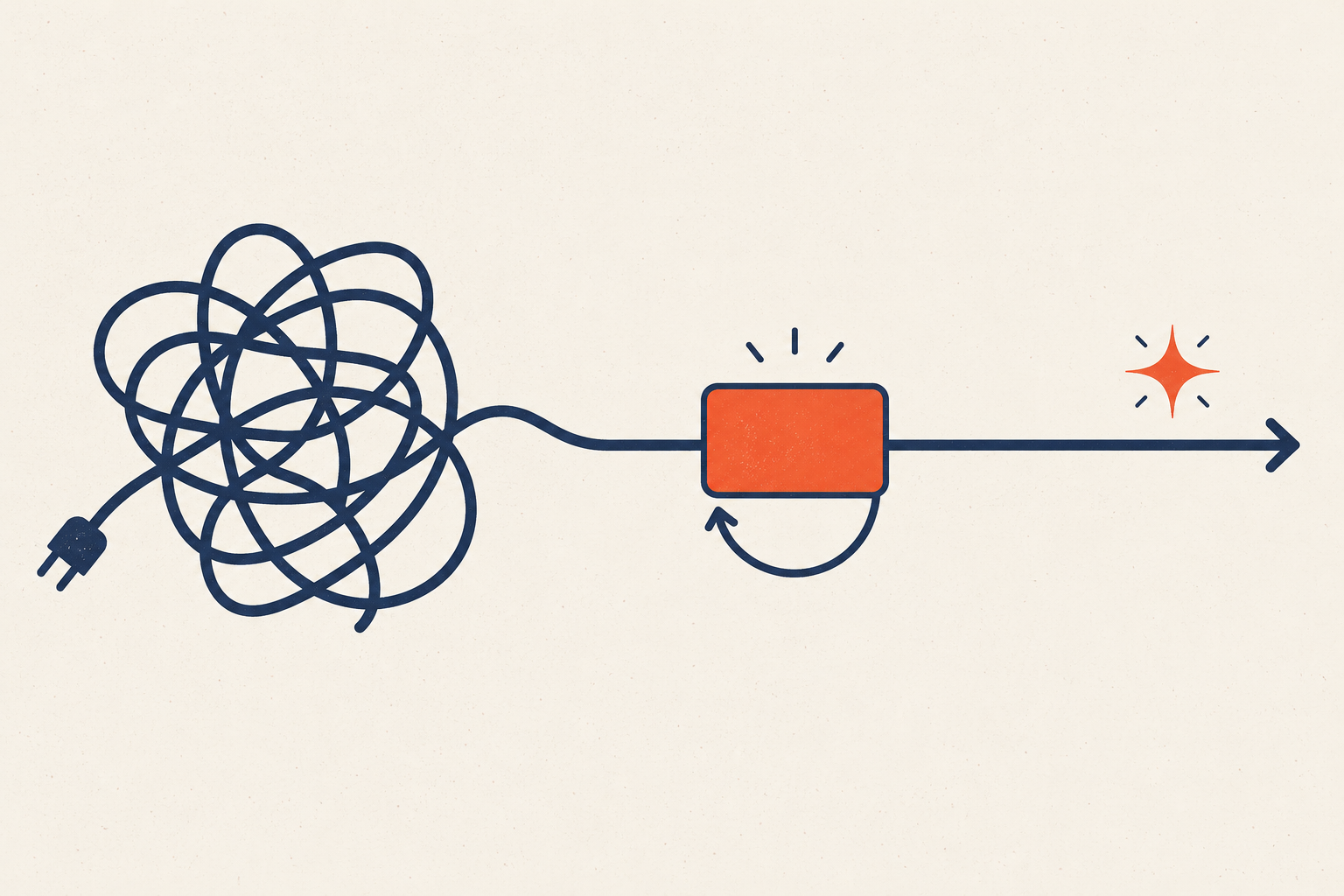
Procrastination is a behavior pattern, not a character verdict. You intended to act, the task became uncomfortable or unclear, and something easier won the next few minutes. Calling yourself lazy does not identify what would make the next attempt more workable.
The useful question is smaller: what is making this task hard to begin right now? The answer might be unclear instructions, emotional discomfort, excessive scale, a distracting environment, depleted capacity, or a need for help. Each barrier calls for a different adjustment.
This guide offers general education and task-design options. It does not diagnose why you are struggling, and it is not mental-health treatment.
Start here — a two-minute diagnosis: Name one task you are avoiding. Finish this sentence without judging yourself: “Starting feels difficult because _____.” Then choose one adjustment from the decision table below.
Procrastination is not every delay
Some delay is deliberate and useful. You may be waiting for information, protecting recovery time, choosing a higher-consequence task, or deciding not to pursue the work. Procrastination is different: the delay conflicts with your intention and is likely to make things worse by your own standards.
Research has connected procrastination with short-term mood regulation: avoiding an aversive task can provide immediate relief even when it creates costs for the future self. Read Sirois and Pychyl’s review. This is one supported perspective, not a complete explanation for every person or situation.
Task characteristics, context, available resources, habits, health, and competing demands can all matter. A 2025 systematic review found a moderate association between procrastination and depression, anxiety, and stress across 88 studies, but an association does not establish that procrastination caused an individual’s distress—or reveal what diagnosis, if any, applies. Read the systematic review and meta-analysis.
Use research to widen the questions you ask, not to self-diagnose from an article.
Identify the immediate barrier
Choose the first row that sounds true today. You can return for another pass if the first adjustment does not help.
| Immediate barrier | Signal | First adjustment |
|---|---|---|
| Clarity | “I don’t know what ‘done’ means.” | Define the deliverable and the next visible action. |
| Emotional discomfort | “I expect embarrassment, boredom, conflict, or failure.” | Name the feeling, lower the stakes of the first pass, and choose a private draft or information-gathering step. |
| Scale | “There are too many parts.” | Separate the project from one action that can finish in a short session. |
| Environment | “Something else captures me before I begin.” | Remove one cue, prepare the materials, and make the intended action the easiest visible option. |
| Capacity | “The step is clear, but it does not fit today’s energy or time.” | Use a minimum version, reschedule honestly, or renegotiate the commitment. |
| Support | “I am blocked by knowledge, authority, feedback, or safety.” | Ask a specific person for the missing input or qualified help. |
Do not turn this table into a personality test. The barrier can change across tasks and days.
If the task is unclear, define the next visible action
Many avoided “tasks” are projects in disguise:
Do taxesFix websitePrepare presentationDeal with insurance
None tells you what your hands will do next. Convert the project into an observable action that produces a small result:
Download the three available tax statements.Open the error log and copy the first repeated message.Write the audience and decision on the first slide.Find the policy number and claims phone line.
A useful next action includes a verb, an object, and a finish line. It should be small enough to start with the time and tools available, but large enough to change the state of the work.
If a step still feels blocked, ask:
- What information is missing?
- What decision am I avoiding?
- Whose response or permission is required?
- What would a rough first pass contain?
The full next-action guide will provide a project-to-action worksheet when it is available.
If the task feels threatening, lower the stakes of the first pass
Do not argue yourself out of the feeling before acting. Name it plainly: “I expect this draft to expose what I don’t know,” or “I expect this call to be uncomfortable.” Then redesign the first step so it does not demand the feared final performance.
Examples:
- Create a private ugly draft that no one will see.
- List questions instead of producing answers.
- Rehearse the opening sentence without making the call.
- Ask for the evaluation criteria before revising the work.
- Separate gathering evidence from making the decision.
This does not guarantee the discomfort will disappear. It reduces how much uncertainty the first move must carry.
After the attempt, replace moral judgment with an operating note:
I stopped when I reached the pricing section because the approval limit was missing. Next: ask Jordan for the current limit.
That note preserves information for the next start. “I failed again” does not.
If the task is too large, use a reversible start
A short start can test the barrier without demanding completion.
- Choose a next action with a visible finish line.
- Set a gentle five-minute timer.
- Work only until the timer ends.
- Stop if you need to; continuing is optional.
- Record the next action before leaving.
The value of five minutes is not that you will “almost always” keep going. Some days you will not, and that does not invalidate the attempt. The short boundary makes the cost of testing the task more predictable.
If a timed interval helps, the Pomodoro Technique guide adds interruption parking, real breaks, and interval-adjustment rules. If timers create pressure, use an event boundary instead: “After I make tea, I will open the document and label the three required sections.”
Use an if-then start plan
An intention such as “work on it tomorrow” leaves the start cue unresolved. An implementation intention specifies the situation and action:
If the 9:00 meeting ends, then I will open the budget sheet and check the first five unmatched entries before opening chat.
Build the plan from four parts:
- a cue you can notice;
- a location where the action is possible;
- one visible action;
- a boundary for stopping or reviewing.
Examples:
If I put my lunch plate away, I will place the insurance letter and policy card on the table.If I sit at my desk at 8:30, I will draft the first two headings before checking email.If the children are asleep, I will review one form for ten minutes, then decide whether to continue.
A meta-analysis of 94 tests reported a medium-to-large aggregate effect of implementation intentions on goal attainment. However, those studies concerned goals broadly, not procrastination specifically. A later procrastination-treatment review cautioned that this wider evidence does not establish the technique as a treatment for people struggling with procrastination. Read the treatment review and its evidence limits.
Use an if-then plan as a low-cost operating aid, not a promise.
Change the environment before demanding more willpower
Make the intended action easier to encounter and competing actions slightly less immediate.
Before the planned start:
- put the required document or object in view;
- close or sign out of the main distraction;
- move the phone beyond automatic reach if it is safe to do so;
- prepare the login, charger, reference file, or physical materials;
- ask housemates or colleagues for a specific protected interval;
- decide where stray thoughts will be captured.
Match the adjustment to the actual conflict. Blocking social media will not clarify an ambiguous assignment. A perfect project plan will not mute an alert that repeatedly captures attention.
Research on task-related feelings and social temptations suggests that low positive task affect can make disengagement toward a tempting alternative more likely, but that study does not show that one environmental change will solve avoidance for everyone. Read the study abstract. Treat the environment as one controllable layer.
For sessions that must survive interruptions, use the focus-blocks and interruption-recovery guide when it is available.
Add accountable support
Support is useful when it changes the information, safety, authority, or follow-through around the task. Ask for something specific:
- “Can you confirm which of these two outcomes you need by Friday?”
- “Will you stay on the call while I open the portal and locate the form?”
- “Can we check in at 2:30 and report whether we completed our first step?”
- “I need feedback on the argument, not copyediting, at this stage.”
Choose a person who can respond without shaming, coercion, or taking over. Accountability should make the action clearer or safer—not create fear of punishment.
If the task involves legal, medical, financial, safeguarding, workplace, or other specialist judgment, seek help from an appropriately qualified or authorized person. A productivity partner cannot replace that expertise.
Use a minimum-day version when capacity is low
Sometimes the honest barrier is capacity. Use a floor that protects essentials and re-entry:
- Check immediate health, safety, care, and true deadline needs.
- Choose one necessary action that fits the available capacity.
- Send one renegotiation or support request if a commitment will not be met.
- Leave one next-action note for tomorrow.
- Stop adding discretionary work.
The minimum-day routine will develop this into a repeatable downshift protocol when it is available. A minimum day is not a hidden challenge to complete the normal list faster.
Review the attempt, not your worth
After the work period, record four facts:
- What helped me begin?
- Where did I stop?
- What barrier appeared next?
- What is the smallest credible return step?
If the five-minute start repeatedly ends at the same point, the pattern is useful data. The task may require clarification, authority, training, conflict support, rest, or a decision to stop. Repeating the same trick harder is not the only option.
The personal task management system can hold the next action, waiting item, calendar commitment, and review so that today’s progress is not lost.
When general productivity advice is not enough
Consider qualified support when avoidance is persistent, causes significant distress, impairs daily functioning, or is entangled with concerns such as anxiety, depression, attention difficulties, trauma, substance use, sleep, or physical health. A licensed health professional can assess the situation; a general article cannot.
Also seek appropriate practical or professional help when consequences are high—for example, eviction risk, legal deadlines, medical care, debt crisis, workplace safety, or risk of harm. If there is immediate danger or a risk of self-harm, contact local emergency services or a crisis service now.
Seeking help is not evidence that you failed to apply a productivity technique. It is a different response to a different level of need.
A one-task experiment
For one avoided task, run this sequence:
- Name the immediate barrier.
- Define one visible action.
- Choose a cue and write an if-then plan.
- Prepare the environment.
- Run a five-minute, fully optional start.
- Record what happened and the next return step.
- Ask for specific support if the same barrier remains.
Measure whether the action became clearer and easier to enter. Do not measure whether you transformed into a person who never delays.
Frequently asked questions
Is procrastination always an emotion-regulation problem?
No. Emotion regulation is one supported perspective, but task clarity, scale, context, health, resources, competing demands, and other factors may contribute. This article cannot diagnose the cause for an individual.
Does the five-minute rule work for everyone?
No. It is a small, reversible experiment. It can make the cost of starting more predictable, but you may stop after five minutes or need a different adjustment.
What if I make an if-then plan and still do not start?
Review the barrier instead of adding self-criticism. The cue may be easy to miss, the action may still be too large, or the task may require information, support, capacity, or a decision to renegotiate it.
When should I seek professional help?
Seek qualified help when avoidance is persistent, distressing, impairing daily life, connected to health concerns, or attached to high-consequence legal, financial, safety, or care needs.
Make the next start more credible
You do not need a perfect explanation for why you avoided the task. You need a safer, clearer next experiment.
Name the barrier. Shrink the visible action. Attach it to a cue. Prepare the environment. Ask for the missing support. Then review what actually happened without turning one task into a verdict about who you are.